Con Edison, NYSERDA & NYGreen: Every AC and Heat Pump Rebate a Brooklyn a Homeowner Can Stack in 2026
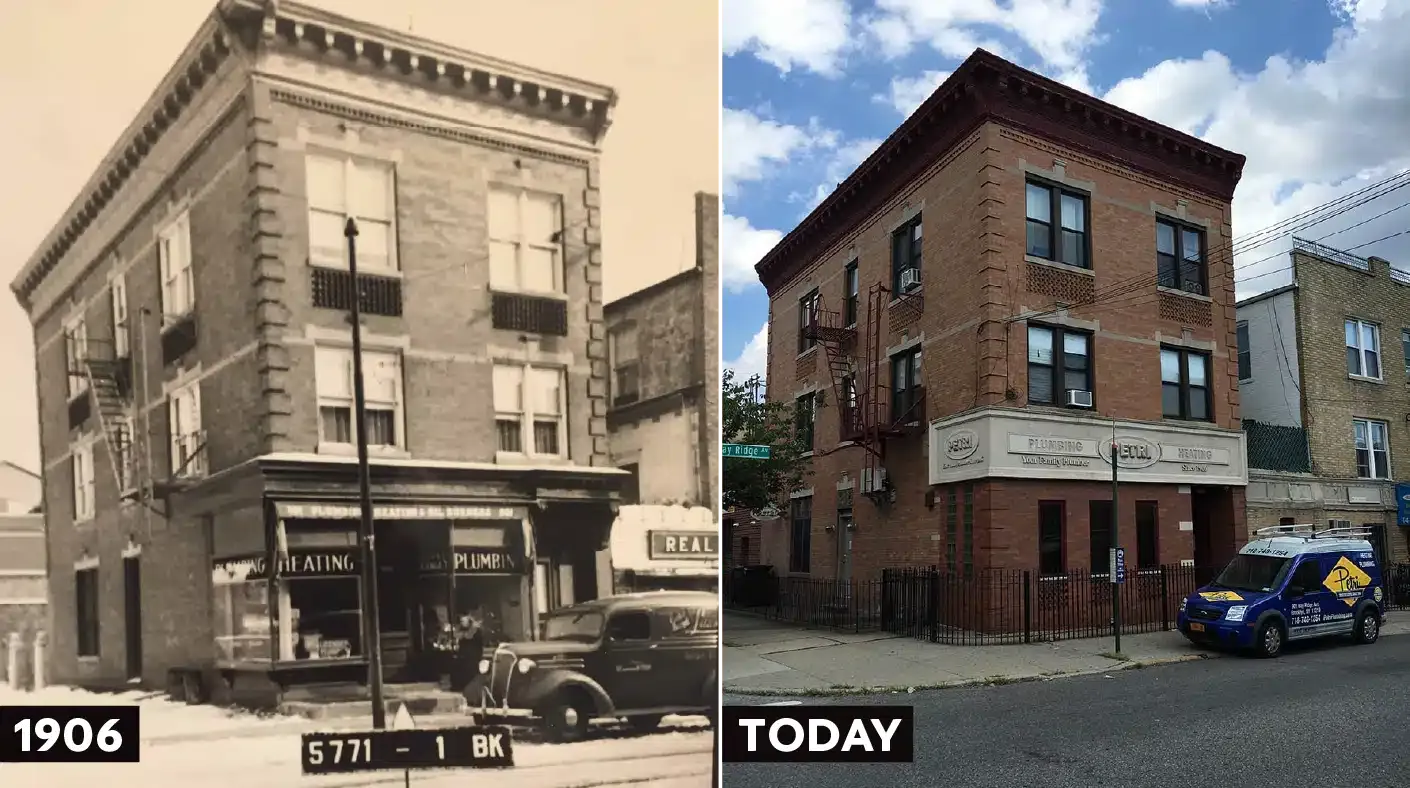
Serving Brooklyn Since 1906
Petri Plumbing, Heating, Cooling & Drain Cleaning helps Brooklyn homeowners combine Con Edison Clean Heat incentives, NYSERDA programs, and our own NYGreen instant rebate on qualifying cooling and heat pump upgrades. Below is what is actually available as of August 2026 — including one major federal credit that expired at the end of last year, and one very common upgrade that qualifies for nothing at all.
Rebate rules change. Every figure here is current as of August 2026 and sourced from Con Edison, NYSERDA, and the IRS directly. Confirm current amounts before you sign a contract.
Straight Air Conditioning Does Not Qualify for a Rebate
This is the single most important thing to understand before you shop, and almost nobody says it plainly.
If you replace a central air conditioner with a newer, more efficient central air conditioner — or buy a window unit — there is no Con Edison rebate and no New York State rebate for that equipment. Con Edison’s residential incentive list covers heat pumps, weatherization, smart thermostats, and electric vehicle charging. A cooling-only system is not on it.
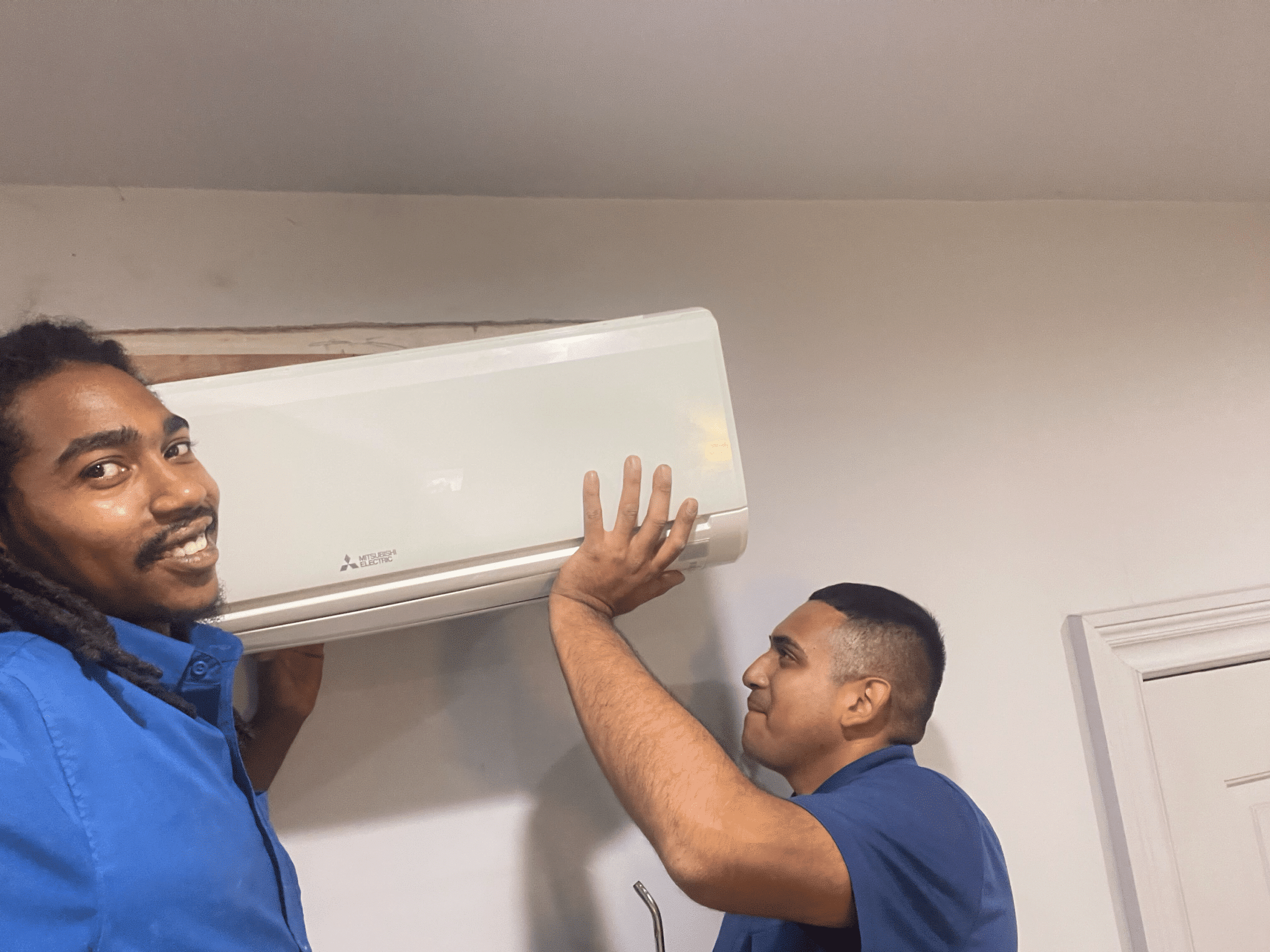
The money is attached to heat pumps, because a heat pump both cools your home in summer and heats it in winter, which is what the incentive is designed to encourage. A ductless mini-split is a heat pump. A central air-source heat pump is a heat pump. Both cool exactly as well as a conventional AC.
So the practical question for a Brooklyn homeowner replacing a dying air conditioner is not “which rebates can I get for a new AC?” It is: would a heat pump work in my home instead? In most Brooklyn housing — brownstones, pre-war walkups, converted apartments — the answer is yes, and choosing one moves you from zero incentives to potentially five figures.
What Con Edison Pays in 2026
Con Edison’s Clean Heat program pays the largest single incentive available to most Brooklyn homeowners. The amount depends on one thing above all: whether you remove or disable your old heating system.
Two caps apply. Your incentive cannot exceed 70% of total project cost, or 85% if your home is in a designated Disadvantaged Community. Several Brooklyn neighborhoods fall inside DAC boundaries, so this is worth checking rather than assuming.
There is also a follow-up incentive. If you previously took a Con Edison incentive for a partial installation — say you put a mini-split in one floor — you can claim up to $4,000 more for a single-family home, or $1,500 for an apartment, when you complete the full system conversion. Homeowners who started small and stopped often do not realize the rest of the money is still on the table.
Geothermal is a separate and much larger category: Con Edison advertises up to $35,000 for a ground-source system. That is rarely practical on a Brooklyn lot, but it exists.
The Contractor Requirement Most Homeowners Miss
Con Edison Clean Heat incentives are only paid on work performed by a participating Clean Heat contractor. You cannot hire whoever you like, install the equipment, and apply for the rebate afterward.
The upside is how it gets paid. Con Edison’s residential program is structured so that the contractor deducts the incentive directly from your invoice — in Con Edison’s own words, “No waiting for rebates!” You are not fronting $8,000 and waiting on a check.
What NYSERDA Adds — If You Qualify by Income
New York State’s programs run through NYSERDA and are income-qualified, unlike Con Edison Clean Heat, which is open to customers at any income level.
EmPower+ is the main one. For a single-family household downstate, which includes all of Brooklyn:
- Low-income households: up to $14,000 in no-cost improvements
- Moderate-income households: 50% cost-sharing up to $7,000
EmPower+ covers air sealing, insulation, heat pumps, heat pump water heaters, and electrical service upgrades. That last item matters more than it sounds. Older Brooklyn homes frequently need an electrical panel upgrade before a heat pump can be installed, and that cost has sunk plenty of otherwise sensible projects.
The federal Home Electrification and Appliance Rebates (HEAR) program is delivered in New York through EmPower+, with its own caps layered on: $8,000 toward a heat pump, $4,000 toward an electrical upgrade, and $1,600 toward air sealing and insulation. Stacked with EmPower+ funding, income-eligible households can reach roughly $24,000 (low-income) or $19,000 (moderate-income) in combined support.
Federal rebate funding has been unusually volatile, so treat HEAR as the figure most worth verifying before you plan around it. Applications run through NYSERDA’s MyEnergy Portal, and eligibility thresholds vary by county and household size.
Comfort Home is the other NYSERDA program worth knowing. It pays tiered incentives on “seal and insulate” packages. It is not a heat pump rebate, but sealing and insulating first means you can install a smaller, cheaper heat pump that actually keeps up — which is the difference between a system that works in a drafty brownstone and one that struggles every August.
The Federal Tax Credit Changed — Read This Before You Rely on Old Advice
Through 2025, homeowners could claim the federal 25C Energy Efficient Home Improvement Credit — 30% of project cost, up to $2,000 for a qualifying heat pump — on top of state and utility incentives.
That credit no longer applies to equipment placed in service in 2026. The IRS states the credit is allowed for qualifying property “placed in service on or after Jan. 1, 2023, and before December 31, 2025.”
This matters because a great deal of rebate advice still circulating online was written while 25C was active, and it tells Brooklyn homeowners to stack federal, state, and utility incentives together. In 2026, for most households, the federal layer is gone. If a contractor’s estimate includes a $2,000 federal tax credit for a 2026 installation, that is a red flag worth questioning.
The good news is that the largest layer — Con Edison Clean Heat — was never federal and is unaffected.
Petri’s NYGreen Instant Rebate
Alongside the public programs, Petri administers its own NYGreen Energy Efficient Instant Rebate Program. It is a proprietary Petri program, not a utility or government one, providing instant rebates on qualifying energy-efficient plumbing and HVAC upgrades — and as our rebates page puts it, it “can be used in combination with our Super Saving Coupons PLUS Government and State Rebate Program.”
That combination is the point. A Brooklyn homeowner working with Petri is not choosing between the utility incentive and ours; the NYGreen rebate sits on top of whatever Con Edison and NYSERDA provide. For upgrades where the remaining balance still needs spreading out, we also offer financing on qualifying plumbing, heating and cooling work.
Petri is a GreenPlumbers®-accredited company and one of New York City’s first licensed Green Plumbers, along with being a certified Energy Star contractor. Energy efficiency work is not a recent addition to what we do — it is the reason the green plumbing side of our business and the NYGreen program exist at all.
How the Layers Actually Stack
For a Brooklyn homeowner converting from a gas or oil heating system to a heat pump in 2026:
- Con Edison Clean Heat — the foundation. Up to $8,000 for a single-family home ($10,000 in a Disadvantaged Community) if the old heating system comes out. Not income-restricted. Deducted from your invoice by a participating contractor.
- NYSERDA EmPower+ / HEAR — if you qualify by income. Up to $14,000 in no-cost improvements downstate for low-income households, or 50% cost-sharing up to $7,000 for moderate-income, with HEAR caps layered on top.
- NYSERDA Comfort Home — tiered incentives on sealing and insulation, which reduce the size and cost of the heat pump you need.
- Petri’s NYGreen instant rebate — applied to qualifying upgrades, designed to combine with the above.
- Federal 25C tax credit — no longer available for 2026 installations.
Total project cost caps still govern the outcome: Con Edison alone will not exceed 70% of project cost, or 85% in a Disadvantaged Community.
Brooklyn-Specific Complications Worth Planning For
Co-op and condo board approval. Mounting an outdoor condenser on a shared roof, rear façade, or fire escape landing almost always requires board sign-off, and boards move on their own schedule. Start that conversation before you finalize equipment, not after.
Permits. Installing or replacing a system in Brooklyn frequently requires permits and code compliance. A participating Clean Heat contractor handles this as part of the job.
Landmark and historic districts. Parts of Park Slope, Brooklyn Heights, Fort Greene, Carroll Gardens and other neighborhoods sit in historic districts with rules about visible exterior equipment. Ductless mini-splits are usually the workable answer because the outdoor unit is small and placement is flexible — something we cover in more detail in our guide to how mini-splits preserve a brownstone’s character.
Electrical capacity. Many pre-war Brooklyn homes need a service upgrade first. Both EmPower+ and HEAR include money specifically for this.
Will a heat pump actually keep up in winter? It is the most common objection we hear, and a fair one. We answered it separately in can heat pumps handle real cold weather?
Frequently Asked Questions
Can I get a rebate for a new central air conditioner in Brooklyn?
No. Con Edison’s residential incentives and New York State’s programs are attached to heat pumps, not cooling-only equipment. Replacing a central AC with another central AC, or buying window units, does not qualify for a Con Edison or NYSERDA rebate. A ductless mini-split or central air-source heat pump cools your home the same way and does qualify.
How much is the Con Edison heat pump rebate in 2026?
For a single-family Brooklyn home, $8,000 if you remove or disable your old heating system, or $2,500 if you keep it with integrated controls. In a Disadvantaged Community those rise to $10,000 and $4,500. Apartments receive $4,000 and $1,000, or $5,000 and $2,000 in a DAC. All are capped at 70% of project cost, or 85% in a DAC.
Is the federal heat pump tax credit still available in 2026?
No. The 25C Energy Efficient Home Improvement Credit applied to property placed in service before December 31, 2025. Equipment installed in 2026 does not qualify. Con Edison and NYSERDA incentives are unaffected.
Do I have to use a specific contractor to get the Con Edison rebate?
Yes. Con Edison Clean Heat incentives are only paid on work by a participating Clean Heat contractor, and the incentive is deducted from your invoice rather than reimbursed later.
Can I combine Con Edison and NYSERDA incentives?
Yes, subject to caps. Con Edison Clean Heat is available regardless of income; NYSERDA’s EmPower+ and HEAR are income-qualified. Households that qualify for both can combine them, though your total incentive cannot exceed the project cost limits each program sets.
What if I already installed a mini-split in part of my house?
You may still claim a follow-up incentive of up to $4,000 for a single-family home, or $1,500 for an apartment, when you complete the conversion to a full heat pump system.
Does a ductless mini-split count as a heat pump for rebate purposes?
Yes, provided it is a qualifying cold-climate air-source heat pump installed by a participating contractor. Most mini-splits sold for Brooklyn homes both heat and cool.
Talk to Petri Before You Commit to Equipment
The difference between $0 and $10,000 in Brooklyn usually comes down to two decisions made early: whether you install a heat pump instead of a cooling-only system, and whether your old heating system comes out. If you are weighing a replacement, our Brooklyn AC installation and replacement page walks through system options and what installation involves.
Petri Plumbing, Heating, Cooling & Drain Cleaning has worked in Brooklyn housing since 1906, across four generations of the same family, from two locations in Bay Ridge and Park Slope. Call or book online, and we will walk through which incentives your home and household actually qualify for before you spend anything.
Incentive amounts current as of August 2026 and subject to change. Con Edison figures from coned.com; NYSERDA figures from nyserda.ny.gov; federal tax credit status from irs.gov. You can check which programs apply to your specific address using the state’s NYS Clean Heat rebate finder. Verify current program terms before making a purchase decision.


Thank you so very very much to Junior and Petri Plumbing & Heating!!! We have heat!!!! We hired Petri to fix another plumber’s mistake that left our boiler burner not working, no fire, no heat. Junior and the Petri team were able to trace and figure out some pretty complicated

Will and Josue are amazing! They helped diagnose and fix my kitchen sink plumbing issues all in a matter of 2 hours. Plus, their detailed report will help with the buildings major overall issues. They truly care about fixing the issues and not just patching it up for a

Great service by pros. Faison and Joe F did a fantastic job. Highly recommend.
Contact Us Today
Ready for top-notch plumbing or HVAC service in New York? Look no further. Petri Plumbing, Heating, Cooling & Drain Cleaning has been the trusted plumber and HVAC company New York homeowners have relied on since 1906. Whether you’re dealing with a plumbing emergency, a heating issue, or need a new cooling system installed, our team is ready to help across Brooklyn, Queens and Manhattan. Same-day appointments are often available. Fill out the form below or call us now to get on the schedule today.
Serving the Brooklyn & Queens Boroughs
 All Service Areas