Why Is One Room in My House So Much Hotter Than the Others?
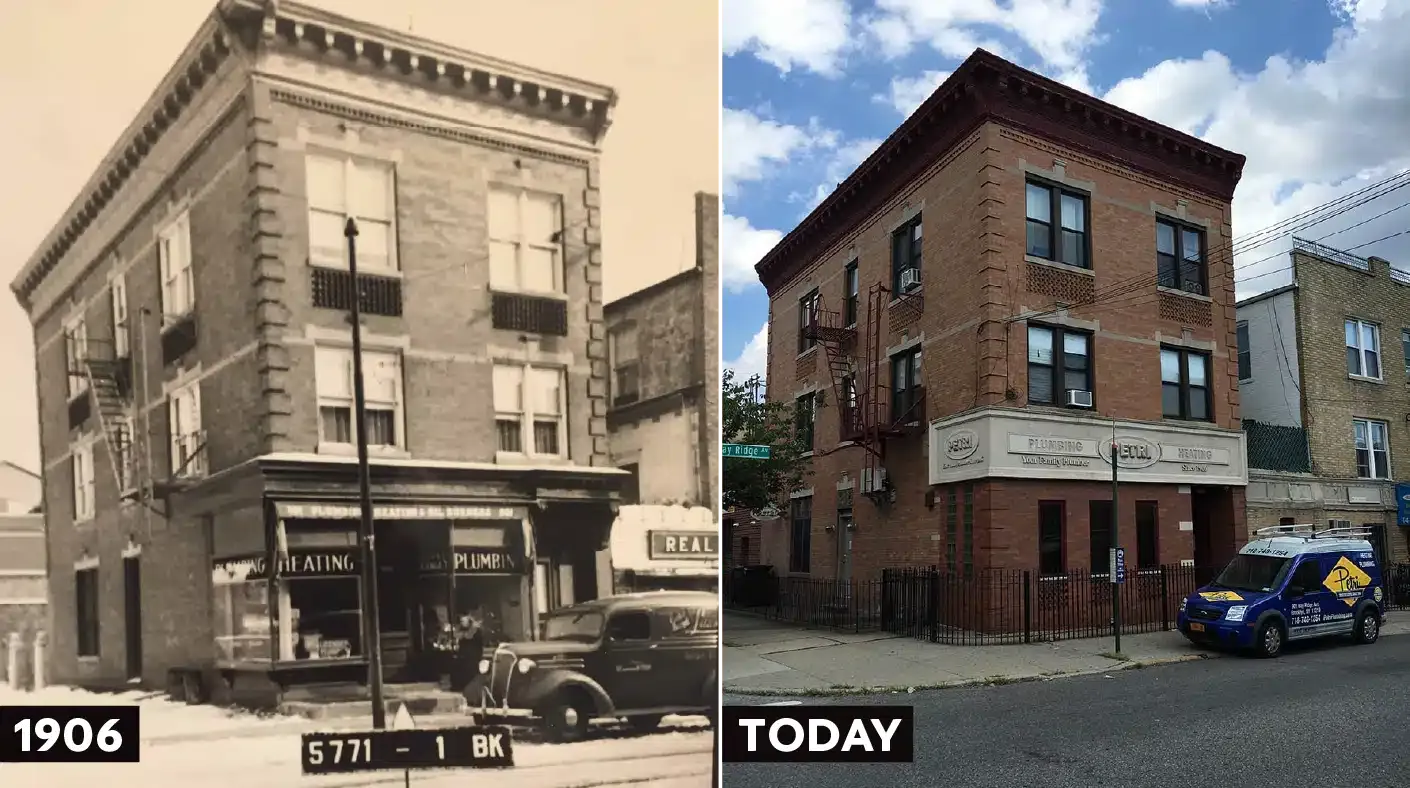
Serving Brooklyn Since 1906

If you’ve ever retreated to your bedroom at night only to find it feels like a different climate zone from the rest of your house, you’re not imagining things. Uneven cooling is one of the most common complaints homeowners deal with in summer, and it’s especially familiar in New York City, where older brownstones, multi-story buildings, and decades-old construction all have their own quirks.
The team at Petri Plumbing, Heating, Cooling & Drain Cleaning has seen this problem plenty of times across Brooklyn and the broader NYC area, and the good news is it’s almost always fixable once you identify the cause.
Here’s a rundown of the most likely culprits.
Your Ductwork Has a Problem (Or Was Never Right to Begin With)
For homes with central air, the duct system is the highway your cooled air travels through to reach every room. If one room consistently runs hot, the duct serving that space might be leaking, crushed, disconnected, or poorly designed from the start.
Leaky ducts are more common than most people realize. The conditioned air that should be reaching your bedroom escapes into the wall cavity or crawl space before it ever gets there. You’re essentially cooling the inside of your walls.
In older homes — and there’s no shortage of those in Brooklyn and across New York City — the ductwork layout might have never been ideal. Maybe it was originally designed for a gas heating system and later adapted for central air, an imperfect retrofit that leaves certain rooms chronically underserved. A duct inspection can identify exactly where the airflow is breaking down.
The Room Is Fighting Too Much Heat Gain
Sometimes the issue isn’t the cooling system at all. It’s how much heat the room is pulling in from outside.
South- and west-facing rooms take a beating from afternoon sun. Large windows, little shade, and single-pane glass all compound the problem. Walls and ceilings with inadequate insulation don’t help either.
A few of the most common heat gain situations:
- Top-floor rooms directly below the attic — attic spaces trap enormous amounts of heat that radiates downward all day long
- Rooms above a garage — garages aren’t conditioned, so the floor above absorbs heat from below constantly
- Corner rooms with multiple sun-facing walls — double the exposure, double the heat load
- Rooms with large west-facing windows — afternoon sun is the most intense, and it hits these rooms hard right when outdoor temps peak
If your problem room checks more than one of these boxes, heat gain is at least part of the story — and no amount of AC adjustment will fully compensate without addressing the source.
Airflow Is Getting Blocked or Misdirected
Before assuming anything complex is going on, check the basics.
Is the supply vent in that room open? Is furniture, a curtain, or a rug partially blocking it? A closed or obstructed vent will tank airflow to that room regardless of how well the rest of the system is working.
Return air matters too. Every room needs a path for air to circulate back to the system. If your room has a supply vent but no return, and you keep the door closed, pressure builds up and hot air has nowhere to go. Keeping interior doors open helps more than most people expect. So does having a gap under the door to allow passive airflow.
Some duct systems also have manually adjustable dampers inside the ductwork that control how much air flows to each zone. If yours does, it’s worth checking whether they’re set correctly — an accidentally closed damper is an easy fix once you know to look for it.
Your System Is Undersized for the Space It’s Cooling
An AC unit that’s too small for the home it’s serving will struggle to keep up on hot days. It might do fine cooling the main living areas near the thermostat while more distant or heat-prone rooms stay warm because the system simply doesn’t have enough capacity to reach them effectively.
This is a common scenario in NYC homes where central air was added after the fact — sometimes with a unit sized conservatively, or for a smaller footprint than the home actually has. If your system has needed repairs frequently or has never quite kept the whole house comfortable, capacity could be part of the equation.
When a Ductless Mini-Split Makes More Sense
For rooms that are chronically hard to cool — whether because of layout, heat gain, or duct limitations — a ductless mini-split is often the most practical fix. These systems deliver cooling directly to the problem space without relying on existing ductwork at all.
They’re a particularly good fit for:
- Converted attic spaces and finished top floors
- Add-on rooms that weren’t part of the original HVAC design
- Top-floor bedrooms in Brooklyn brownstones where duct runs are long and inefficient
- Any room where the central system consistently falls short, no matter what
You get precise temperature control for that specific space, and you’re not asking your central system to solve a problem it was never built for. If you’re curious whether this makes sense for your home, ductless mini-split installation is something Petri handles regularly throughout Brooklyn and the surrounding New York City area.
Don’t Skip the Annual Tune-Up
A well-maintained system is a more efficient system, and that efficiency shows up most clearly in how evenly your home cools. Low refrigerant, dirty coils, and a struggling blower motor all reduce your system’s ability to distribute conditioned air effectively. If your AC hasn’t had a professional maintenance visit recently, scheduling one before peak summer heat is a smart move — especially if you’ve already noticed uneven cooling starting to develop.
So Where Do You Start?
Start with the easy stuff: check vents, open interior doors, look for obvious obstructions. If nothing there explains it, think about the room’s sun exposure and insulation. If those don’t fully account for it either, the problem is likely in the ductwork or the system itself.
A good HVAC technician can measure airflow at each vent, check static pressure in the duct system, and pinpoint exactly where things are going wrong. It takes the guesswork out of it entirely.
If your NYC home has a room that just won’t cool down no matter what you try, get in touch with Petri and we’ll figure out what’s actually going on.


Thanks to George and everyone at Petri for my boiler repair. They were informative and helpful!

Faizon was great. Came next day, very helpful and professional, answered all my questions. Highly recommend

Michael was a pleasure to work with! He was responsive, professional and very friendly.
Contact Us Today
Ready for top-notch plumbing or HVAC service in New York? Look no further. Petri Plumbing, Heating, Cooling & Drain Cleaning has been the trusted plumber and HVAC company New York homeowners have relied on since 1906. Whether you’re dealing with a plumbing emergency, a heating issue, or need a new cooling system installed, our team is ready to help across Brooklyn, Queens and Manhattan. Same-day appointments are often available. Fill out the form below or call us now to get on the schedule today.
Serving the Brooklyn & Queens Boroughs
 All Service Areas